

Customer story · Hotels and hospitality
The Biltmore starts every shift with a ranked list.
The Biltmore Hotel in Coral Gables has run its plant for a century. Since spring 2026 the engineering team has opened each morning with a Smart Tenants briefing: the conditions that need attention, ranked, with the first check written out, drawn from the building automation system the hotel already had.
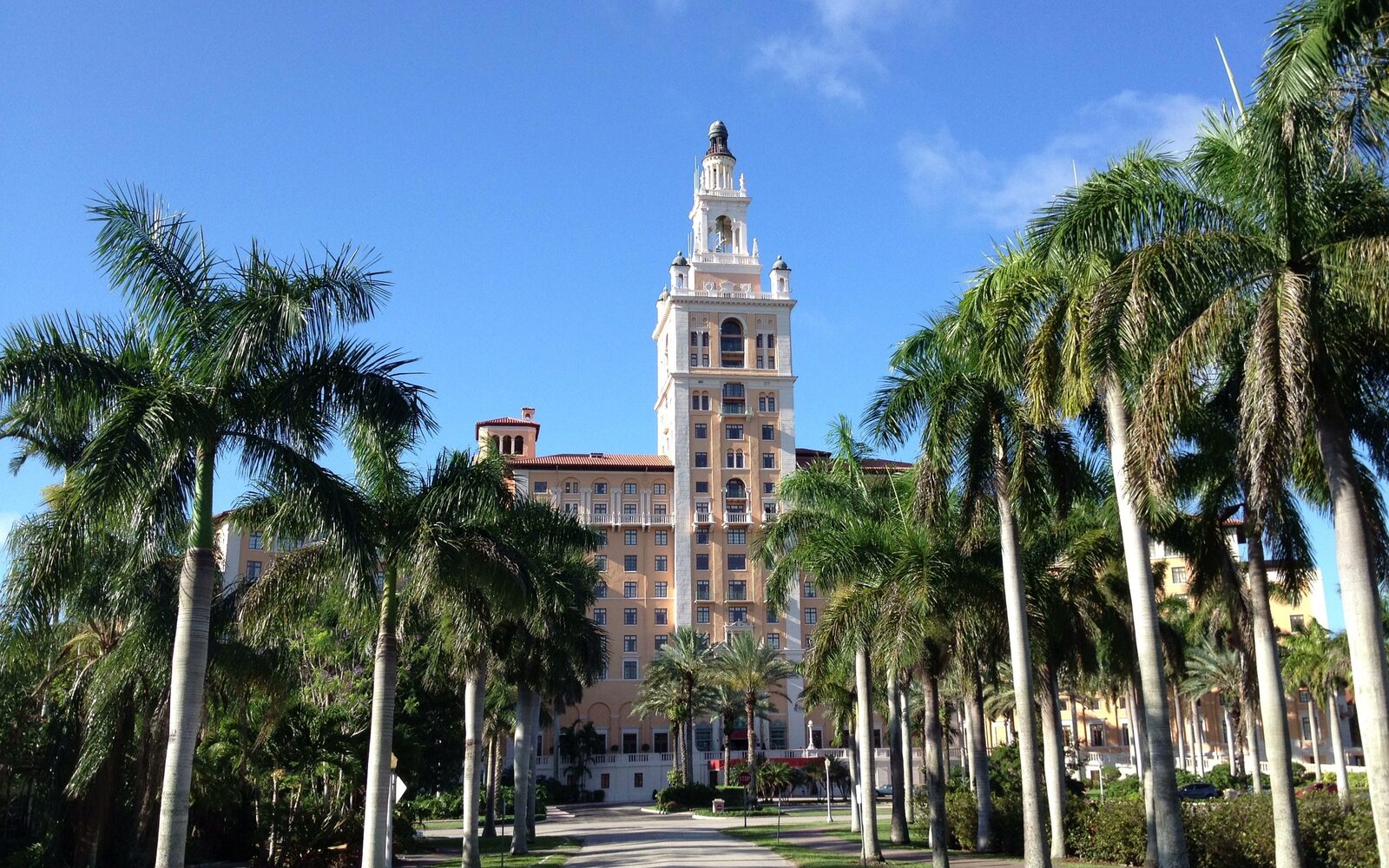
At a glance
The Biltmore Hotel
- The property
- A 1926 resort hotel in Coral Gables, Florida, with ballrooms, restaurants, a spa and a conference center, served by a central chiller plant.
- What is connected
- The Honeywell building automation system already in the building, read over BACnet: five air handlers, the chiller plant and the controllers that run them, nine in all. No new sensors, no new wiring.
- What the team receives
- A morning briefing at six every day, an air handler performance report, a chiller plant report and alarm emails for the engineering team; Insight for ownership.
- Since
- Spring 2026, with the daily briefing in the engineers’ inboxes from the summer.
The situation
A working building automation system, and nobody spare to sit in front of it.
The hotel had controls, alarms and history. What it did not have was someone whose job was to read them before the day started. Problems announced themselves the usual way: a warm ballroom, a complaint from the floor, a unit found off on a walk-round.
Smart Tenants put a small server on the hotel network. It reads the existing controllers over BACnet and makes only outbound connections, so the hotel’s systems stay the hotel’s. Alarm thresholds were set from what the equipment actually does, so healthy points stay quiet and the list stays short.
From the briefing
What the engineering team saw first.
Real conditions from the first weeks, condensed. Each one opens to show what the data showed, what was inferred and what the team was asked to check.
Two reports, one answer.
The morning briefing comes from deterministic checks on each unit. The Air Handler Performance report reads the raw controller points and knows nothing about those checks. In the first weeks both found the same faults independently, which is the strongest evidence the checks are right.
Morning briefing
The Biltmore, condensed from the daily briefing
- 1AHU-12high
Cooling valve open with the fan stopped.
Do firstConfirm the valve command at the controller and close it until the fan runs.
What the data shows
- Fan off.
- Chilled-water valve three-quarters open.
- No airflow through the coil.
What is inferred
Chilled water flowing through a stopped unit: wasted pumping, and a coil that can freeze with no air across it.
What to check
Confirm the valve command at the controller and close the valve until the fan is proven.
- 2AHU-41high
Return-air CO2 above the limit while occupied, the highest in the fleet.
Do nextCheck the outside-air damper and minimum airflow on a unit already at its airflow limit.
What the data shows
- Return CO2 above the limit through a Saturday of occupancy.
- The unit is known to be at its airflow limit.
What is inferred
Ventilation short of the occupancy, not a sensor fault: the reading rises and falls with the people in the room.
What to check
Check the outside-air damper position and the minimum airflow setting. The engineer confirmed the condition matched what he sees on the floor.
- 3AHU-38watch
Return-air temperature sensor reading off the scale.
Do nextInspect the sensor and its wiring at the controller.
What the data shows
- Return-air temperature reporting far below any possible room temperature.
What is inferred
A failed sensor or an open input, not a space condition. The reading is left out of comfort checks until it is repaired.
What to check
Inspect the sensor and its wiring at the controller; the comfort checks resume on their own once it reads sensibly.
From the air handler report
Five units, side by side.
The Air Handler Performance report reads the raw controller points every weekday at 7:30 and lays the units out together. The pattern is what one unit at a time cannot show. Condensed from the report of Thursday 8 October 2026, 7:30.
| Unit | Fan cmd | Fan proof | Cooling valve | Static (in wc) | Discharge (°F) | Finding |
|---|---|---|---|---|---|---|
| AHU-12First-floor board room | On | Off | Three-quarters open | 0.12 | 48.9 | Not running. The high-static safety has tripped and the fan has not proved since the reports began. Chilled water still flows through the coil. |
| AHU-38Service building, first-floor offices | On | Off | Nearly closed | 0.55 | 60.3 | Moving air, but the proof contact says otherwise and the fan alarm is latched. Closest of the five to its setpoint. |
| AHU-39Service building, second-floor east offices | On | On | Fully open | 0.26 | 51.7 | Air 13 °F below the 65 °F setpoint with the valve fully open. Fan at full speed and duct static still under its setpoint. |
| AHU-40Service building, second-floor east offices | On | On | Fully open | 1.19 | 50.0 | Air 15 °F below setpoint. Duct static more than double its setpoint, and the fan speed reads above its own scale. |
| AHU-41Service building, second-floor west offices | On | On | Fully open | 0.14 | 47.9 | Coldest in the fleet, 17 °F below setpoint. Return-air CO2 the highest of the running units. |
Three units share one pattern: the controller’s own output is holding the valve open, so this is a control problem rather than a stuck actuator. AHU-38, the same kind of unit with its valve nearly closed and its discharge near setpoint, shows these controllers can modulate. The data cannot show whether the valves physically follow the command; that is the check.
Over time
Sixty-six days of mornings.
A report that runs every day is only useful if it remembers yesterday. Every condition carries the day it was first seen. An event keeps the day it was last observed. Nothing is called fixed on one morning’s reading; two reports have to agree.
The first reports.
Within a week the briefing, the air handler report and the chiller report had between them listed twenty-three of the thirty-six conditions open today, each with the day it was first seen. After that first week the list grew only when something changed.
The first alarm.
A Saturday. Return-air CO2 on AHU-41 crossed the 1,000 ppm limit at 10:15 and stayed above it into the late afternoon, on a unit already known to be at its airflow limit. The alarm fired on the threshold the hotel’s own history had set.
A fan stopped mid-morning.
At 06:42 the supply fan on AHU-39 stopped with the building occupied and did not come back until 09:49. The air handler report at 7:30 caught it while the fan was still off. The unit recovered on its own, so the entry keeps the day it was last observed instead of being called fixed. It happened again on 24 September, for 49 minutes.
The engineer’s check.
In the first review with the hotel, the engineer picked out the AHU-41 ventilation finding as matching what he sees on the floor. What the team asked for next is listed further down this page.
A Sunday at the chiller plant.
From 02:40 to 09:45 Chiller 2’s compressor current read zero while its panel reported RUN. The Sunday chiller report opened it as a high-severity condition. Monday’s report disputed it on Monday’s data, and the entry stays open until two reports agree it has cleared.
Sixty-six days in.
Thirty-six conditions are on the list. Each carries the day it was first seen, and each morning the briefing prints how many reports have carried it, so a long-running issue stays in view instead of fading into the background.
- Daily peak, ppm
- Alarm limit, 1,000 ppm
- Setpoint, 800 ppm
Sixty-nine days of the reading behind the ventilation finding. It rises and falls with the people in the room and crosses the alarm limit on event days, ten of the sixty-nine shown. Because it tracks occupancy, the data points to ventilation short of the load rather than a sensor fault. The outside-air damper and the minimum airflow setting are the check.
Lessons
Built for the plant as it is.
Real plants have units that switch off, sensors they were never fitted with, and readings that cannot be right. The checks are written for them.
- A stopped unit is still checked. Checks keep watching a unit after it switches off, so a valve left open on a stopped unit is reported as a finding. One reached the hotel’s report as a high-severity item.
- Checks run on the sensors the building has. Economizer and coil checks work from whatever sensors a unit has. Where those sensors cannot tell two causes apart, the report says so.
- A reading that cannot be right is named, not used. An off-scale return-air sensor and an implausible chiller return temperature are reported as instrumentation problems and kept out of every calculation that depends on them.
- A safety trip explains what follows it. When a high-static trip stops a fan, the low static reading that follows is read as part of the trip, not as a second fault. The check questions a trip only while the fan is running.
Next
What the team asked for next.
- Put a dollar figure on the conditions the briefing already detects.
- Show the change after something is fixed.
Where it stands
Shipped, and said plainly.
- Cost lines now appear in the briefing, priced from nameplate data for the conditions it detects.
- Resolution is detected and reported when a condition clears.
What would a morning briefing say about your property?
Tell us about your building systems and we will show you what a morning briefing would say.